07:45 Invaders and visitors: The Vikings. | |
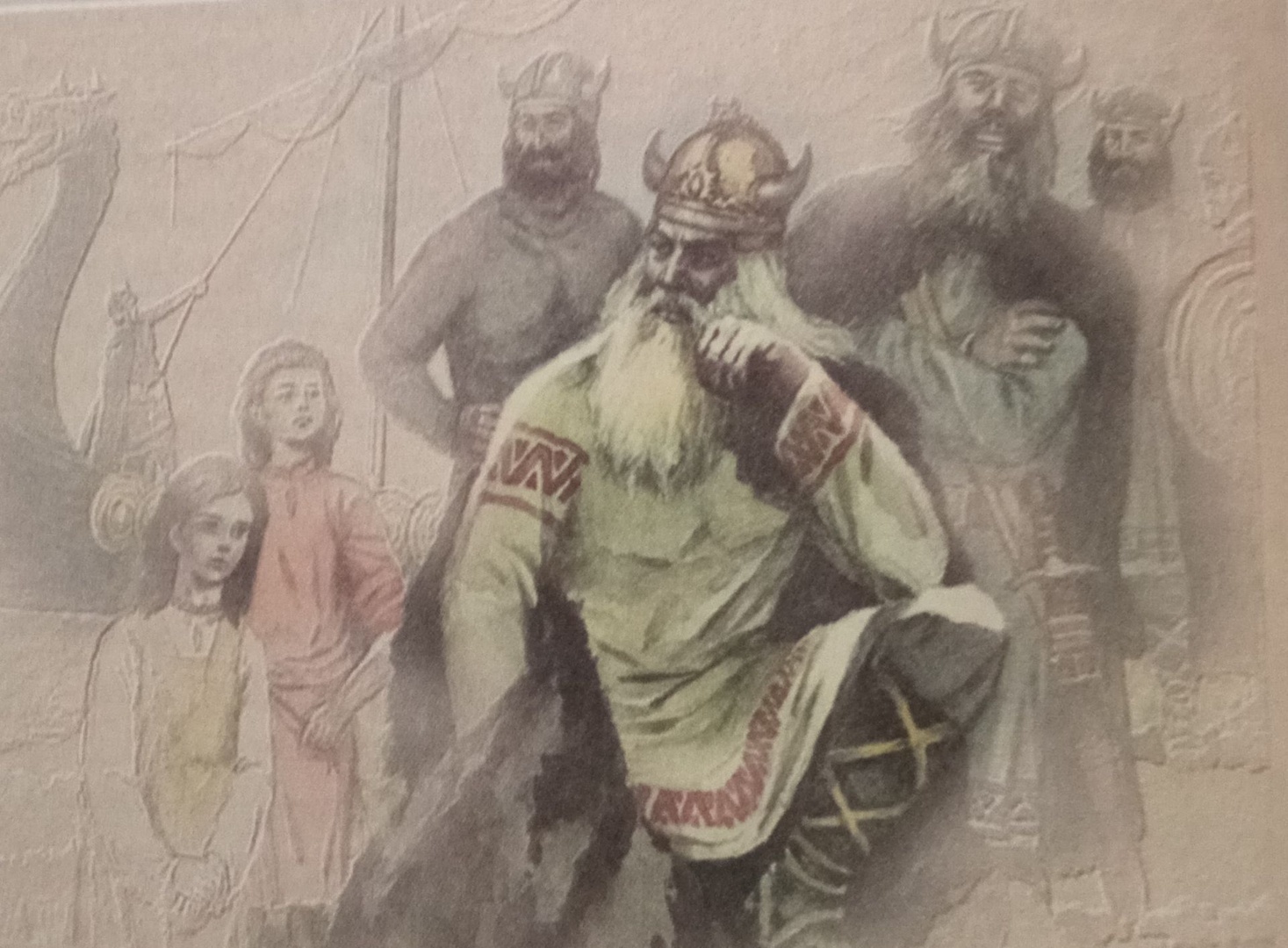
By the end of the 8th century the British Isles were subjected to one more invasion of non - Christian people from Scandinavia - the Vikings.In Britain they were also known as Danes or Norsemen. The Vikings came from Norway and Denmark ( Scandinavia) and settled in the Scottish Islands and in some areas of Eastern England making the town of York the capital of their kingdom. They were daring masters of the sea. Their swift wooden longships, equipped with both sails and oars, enabled them to undertake practical raids on the coastal monasteries and settlements of the British Isles, western Europe and beyond. The word 'Viking' probably means 'sea pirate' or 'people of the sea inlets'. The Vikings were known as very violent and cruel warriors but they were also noted by their skill in constructing ships and as good sailors. The Vikings are broadly viewed as pagan plunderers, but they were quick to adopt Christianity alongside their own gods. They established the 'Viking rule', called Danelaw - the land where the law of Danes ruled. Step by step, they succeeded in conquering all the territory of Britain. 'Viking rule' left significant traces on English vocabulary. The Scandinavian settlers spoke Old Norse, which was related to Anglo-Saxon, and which is the parent language of modern Danish. The similarity of Old English and Old Norse led to much borrowings: sky, skirt, ski, skill, die, law, husband, wrong, window, weak, ugly, saga, gate, give, get, birth, them, they, etc. The mixing of the two languages greatly enriched the English vocabulary. | |
|
| |